

About Us
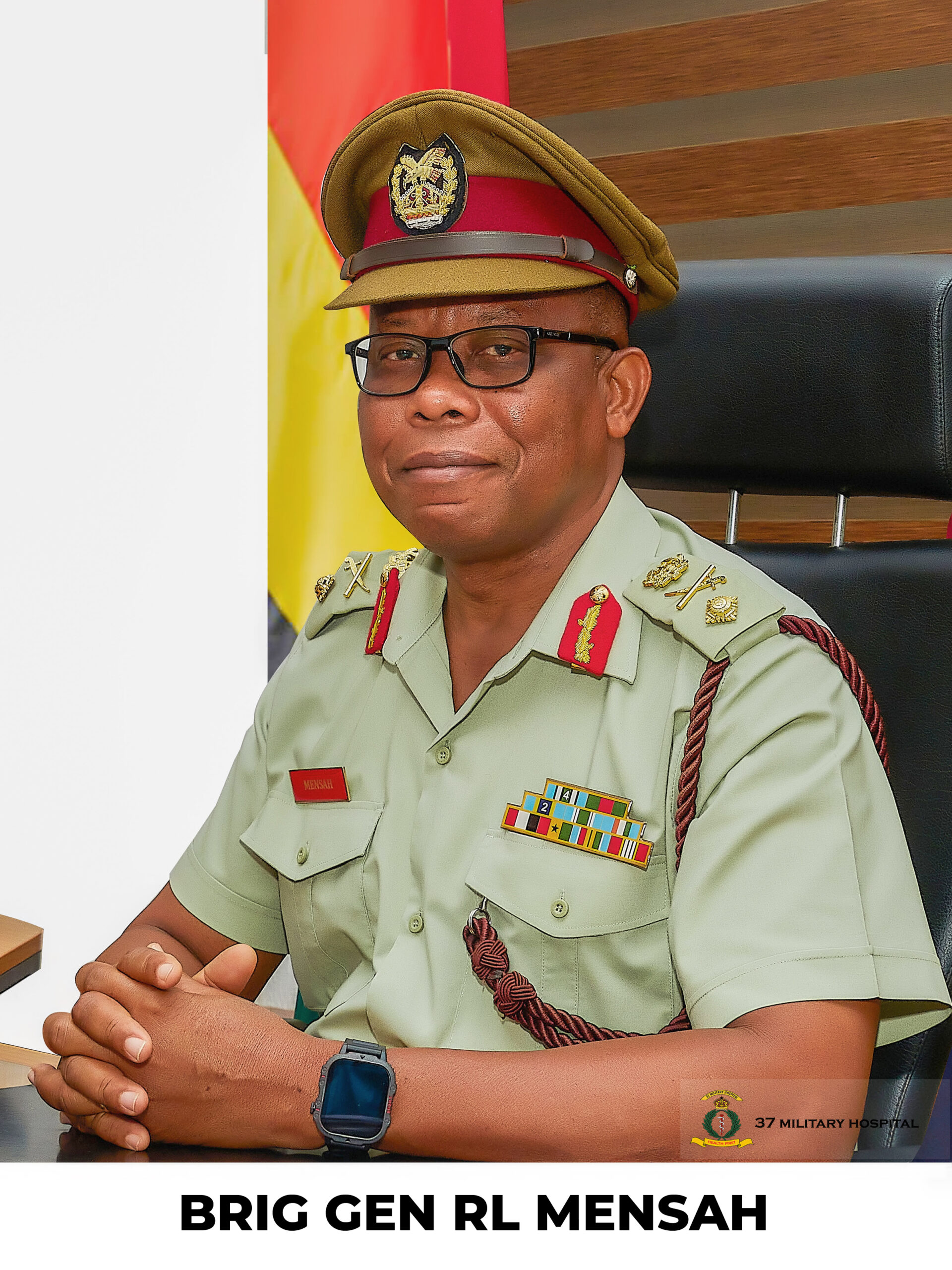
COMMANDER 37 MILITARY HOSPITAL
Who We Are
Not Just Better Healthcare, But a Better Healthcare Experience.
The watchword here is discipline. As a military institution, we try to marry up military traditions with those of a health delivery facility.
As a Military Hospital, our primary objective is to provide healthcare to service personnel and their families, Defence Civilian Staff of the Ghana Armed Forces and Ministry of Defence and their families, ex-service personnel, members of the diplomatic corps, senior government officials and their families, all of who are grouped as Entitled Personnel.
We are however open to all others including the general public as non-entitled personnel for a fee.
In addition to these roles, 37 Military Hospital serves as the Government’s Emergency and Disaster Hospital and the United Nations Level IV Hospital in the West Africa sub-region.
We provide healthcare services to several International Organizations and NGOs operating in Ghana and West Africa in general. Our facility is well kept and neat and may be compared to any facility of its kind anywhere in the world.
Our Mission
To support the Ghana Armed Forces by providing quality healthcare services for the full range of 5 Garrisons deployments and beyond, and to sustain the health of personnel of the Ghana Armed Forces , their dependents and the Nation as a whole in collaboration with their stakeholders.
Our Vision
To maintain a highly motivated professional medical personnel capable of delivering efficient and quality healthcare for the Ghana Armed Forces and the Nation.
Our Commitment
To deliver outstanding healthcare services with professionalism, compassion, and military excellence. We strive to uphold the highest standards of patient care, medical innovation, discipline, and integrity while serving military personnel, their families, and the nation with dedication and honor.

Specialist Hospital Delivering Excellent Health Services.
The 37 Military Hospital is a specialist hospital located in Accra and situated about four (4) kilometers from the Accra International Airport on the main Airport-Accra Central Road. It is located directly opposite the Army Officers’ Mess, and a few metres away from the Flag Staff house, the seat of Government. The name of the hospital is mostly used to refer to the community in which it resides.
The hospital is centrally located and accessible from every direction in terms of vehicle accessibility. It has a helipad which makes it convenient for helicopter landing for which reason patients can be delivered directly from any part of the country during emergencies.
It is a 500-bed facility with about 70% of all inpatients of the hospital belonging to the non-entitled general public. Additionally, the hospital now serves as the Government’s Emergency Response health facility and therefore becomes the Centre of action in the event of major disasters in the country. Such instances are the Accra Sports Stadium disaster that occurred in the year 2001, the nationwide doctors’ strike action in 2011 and 2015, the June 3rd disaster which occurred in 2015 at Odawna-Circle, and the gas explosion that occurred at a gas filling station close to the International Trade Fair Centre in 2017 at La and the Atomic junction gas explosion in 2017.
History of 37 Military Hospital
The hospital was originally established and commissioned on 4th July, 1941 by a British military officer, General George Giffard, the then General Officer Commanding (GOC) the West African Region as a Military Hospital to provide treatment for troops injured in the Second World War. It was the 37th General hospital to be built within the British Empire to offer such services. The Hospital’s name changed to 37 Military Hospital of the Gold Coast in 1956.
Before independence and during the early years of independence, the hospital was manned mainly by British staff with the first Commanding Officer being Col MacFadden and Maj King as Matron. When Ghana gained Independence in 1957, the 37 Military Hospital recruited its first indigenous Doctors, nurses and other medical staff and commissioned them to mann the hospital. These included Col SA Obeng, Col C Adjetey, Maj Mercy Addo, Capt C Nartey, Capt Geace Lutterrodt, Capt Margaret Abavana and Capt Sowah.
The first indigenes to assume control of the facility in 1961 were Lt Col Adjetey as Commanding Officer, Lt Col Christine Debrah as Matron and Col SA Obeng, as Director of Medical Services. Command has therefore remained thereafter in the hands of competent Ghanaian professionals to this day.
Over the years, the hospital has grown to become the second largest medical facility in Accra and the third largest in the country, after the Korle Bu Teaching hospital in Accra, and the Komfo Anokye Teaching Hospital in Kumasi. It continues to be popularly known as the 37 Military Hospital throughout Ghana and the West African sub-region with its Motto, HEALTH FIRST.
In 1987, the Hospital called on organizations and other corporate bodies to assist in the renovation of the wards. The Lebanese Community in Ghana renovated Ward 2, which was then the Neurological ward, and the ward was renamed Cedar Ward, whilst the Indian Community in Ghana renovated the Female General Ward 10 and it was renamed Ghandhi Ward. In 1989, a decision was made to rename the remaining Wards after some notable personalities of the Military Hospital and the country at large.
Officers’ Ward 1 is now known as Anoff Ward, named after Col WC Anoff, a former Director of Medical Services (DMS) of the Ghana Armed Forces, Allied Surgery Ward 2, currently the Allied/Cedar Ward which was adopted by the Lebanese Community in Ghana. Surgical Ward 3, now Tamakloe Ward was named after Col Nyaho Tamakloe, a former DMS, Medical Ward 4, now known as Opoku Ward was named after WO1 Opoku, the first Ghanaian Regimental Sergeant Major (RSM), the Orthopaedic Ward 5, now Easmon Ward was named after Prof Easmon, the first Ghanaian Surgeon.
The Isolation Ward 6, now Simango Ward, was named after Dr Simango who was also a former DMS, Male Medical Ward 7, now known as Bandoh Ward, was named after Brig Gen JK Bandoh, also a former DMS, Chest Ward 8, known as Debrah Ward was named after Lt Col Debrah, the first Ghanaian Matron, Paediatric Ward 9, is now known as the Nkrumah Ward. The rest are the Families Ward 1 (F1), now Yebuah Ward and was named after Col F Yebuah, a former matron, Families Ward 2 (F2) now the Yaa Asantewaa Ward named after the famous Ashanti Warrior and the Families’ Isolation Ward F3 which was the Obeng Ward was named after Col Obeng, the first Ghanaian DMS.
Currently, the hospital has a Headquarters at Burma Camp known as the Ghana Armed Forces Health Services (GAFHS) and is manned by a Deputy Chief of Staff Medical (DCOSMED) and a Commander who heads the hospital assisted by a Commanding officer. Also, some key appointment holders of the headquarters of the 37 Military Hospital are the administrative officer medical, administrative officer general, chief nursing officers, Command Sergeant Major, Regimental Sergeant Major, Chief Clerk and other medical and non-medical officers.
The facility has both Soldiers and Defence Civilians Staff, with the role of promoting and maintaining quality healthcare, preventing diseases, caring for, and treating those disabled by sickness or injury. They form the necessary peacetime nucleus from which the medical services could expand in emergency and war.
The 37 Military Hospital also serves as the United Nations (UN) Level IV Medical facility in the West African sub-region, providing health care to UN soldiers and workers from the conflict areas in the region. Several multinational companies and Non-Governmental Organizations (NGOs) operating in Ghana and other West African countries also depend on the hospital for their health care needs. In this regard, the hospital has entered into agreement with several international organizations for emergency and routine health care for their work force including both expatriates and local staff.
This may be attributed to the excellent healthcare delivery services at the hospital and the relative peace enjoyed by Ghanaians in the sub region where conflict is rife.
It is envisaged that these requests will continue to increase and the hospital, aware of this, is putting in place adequate measures to meet the envisaged increased demand on it.
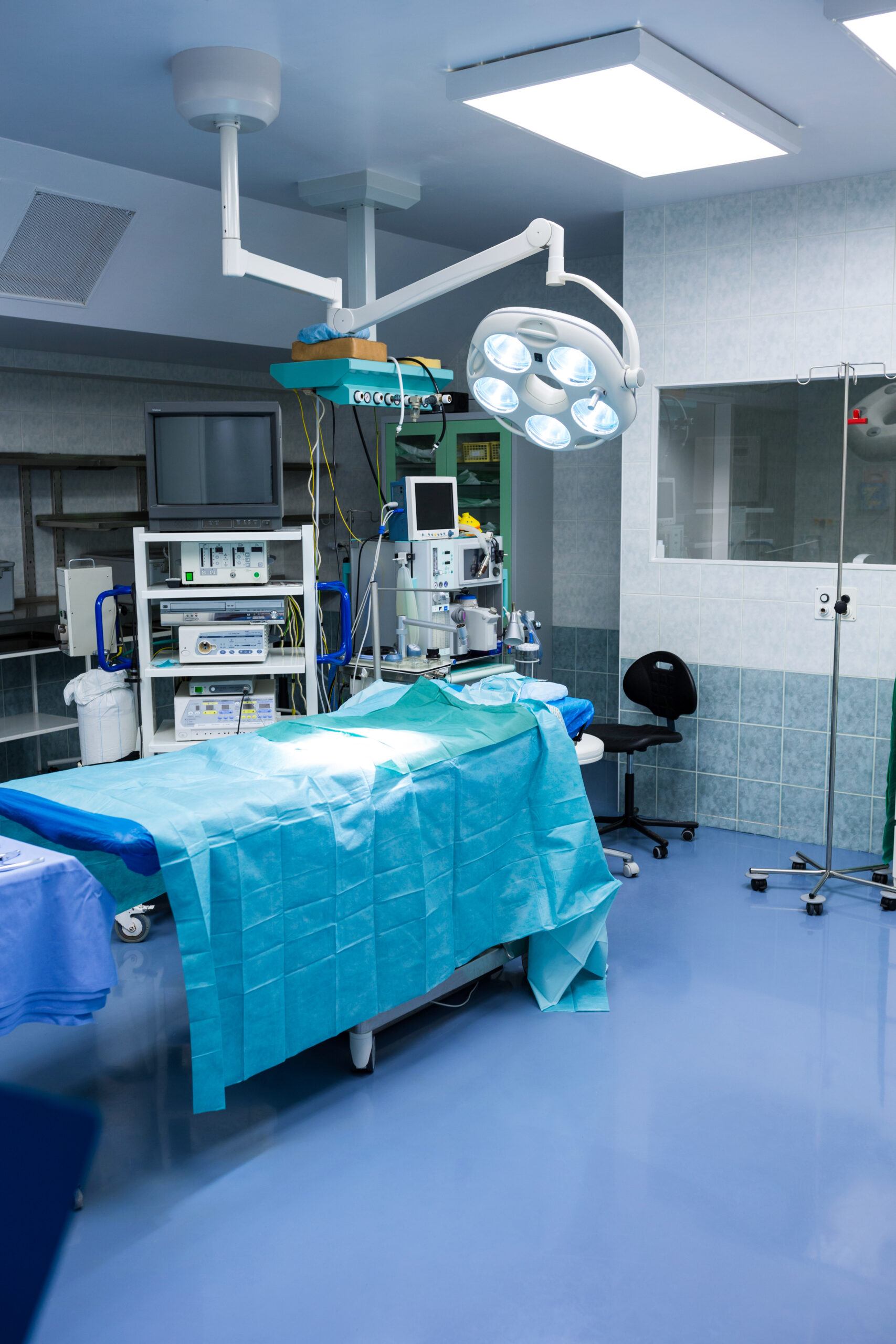
Roles of 37 Military Hospital
Providing comprehensive medical care to active-duty service members, veterans, authorized dependents and the general public
The Military Hospital as the major health facility for the Armed Forces at its inception was military-centred in its focus and target population. The constituted roles of the main hospital clientele were:
These roles were later revised to include Medicare for troops and their families, senior civil servants of the Ministry of Defence, Veterans and some Diplomatic Missions.
These roles were yet again revised in conformity with contemporary needs of the Armed Forces and the nation in general and the clientele base was expanded to cover in addition to the above, all civilian employees of MOD and their families, senior government officials and their families as well as the general public.
The 37 Military Hospital also serves as the United Nations Level IV Medical facility in the West Africa sub-region providing health care to UN soldiers and workers from the conflict areas in the region. Several multinational companies and NGOs operating in Ghana and other West African countries also depend on the hospital for their health care needs.
In this regard, the hospital has entered into agreement with several international organizations for emergency and routine health care for their work force including both expatriates and local staff. This may be attributed to the excellent health delivery services at the hospital and the relative peace enjoyed by Ghana in a sub region where conflict is rife.